
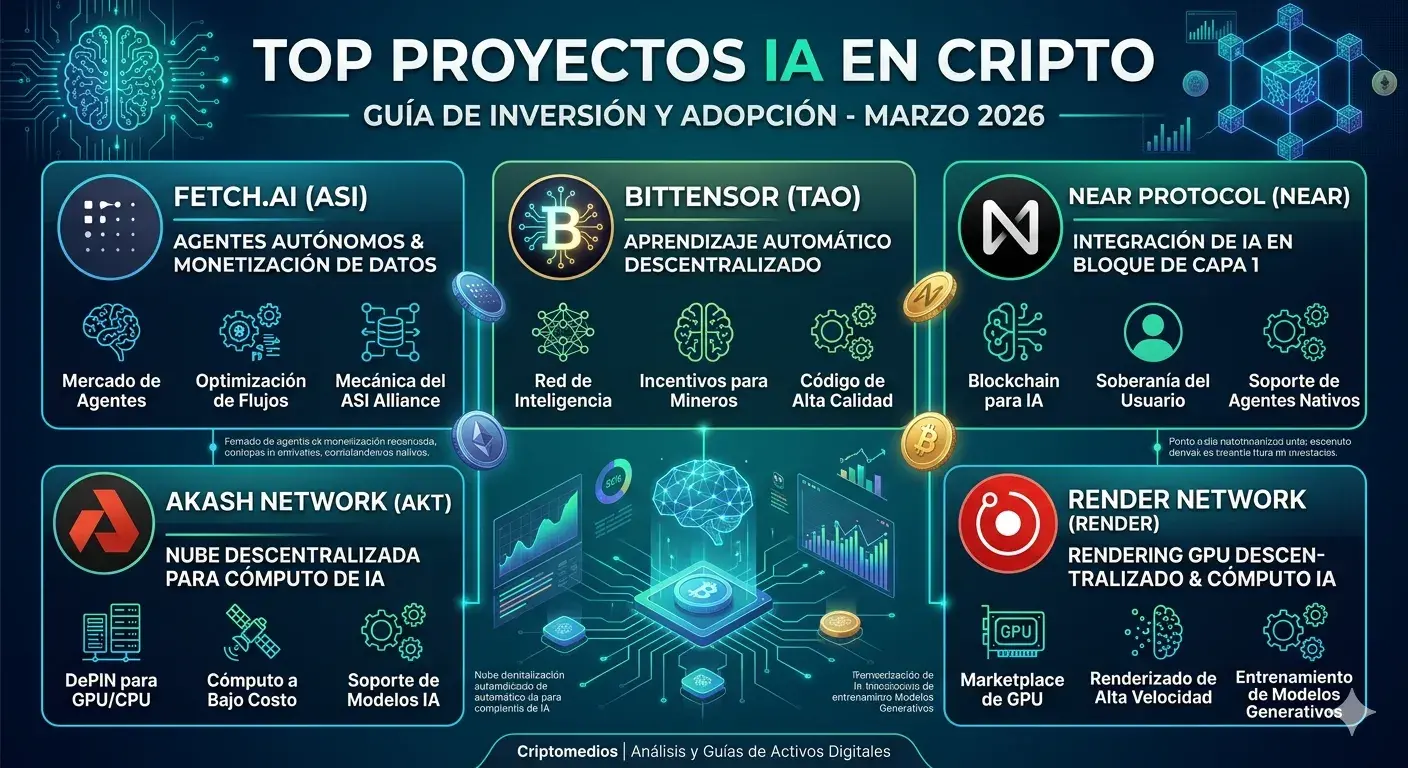
- Systemic Integration: According to 2026 reports, AI projects and blockchain are no longer isolated concepts; they now form a unified infrastructure for the digital economy.
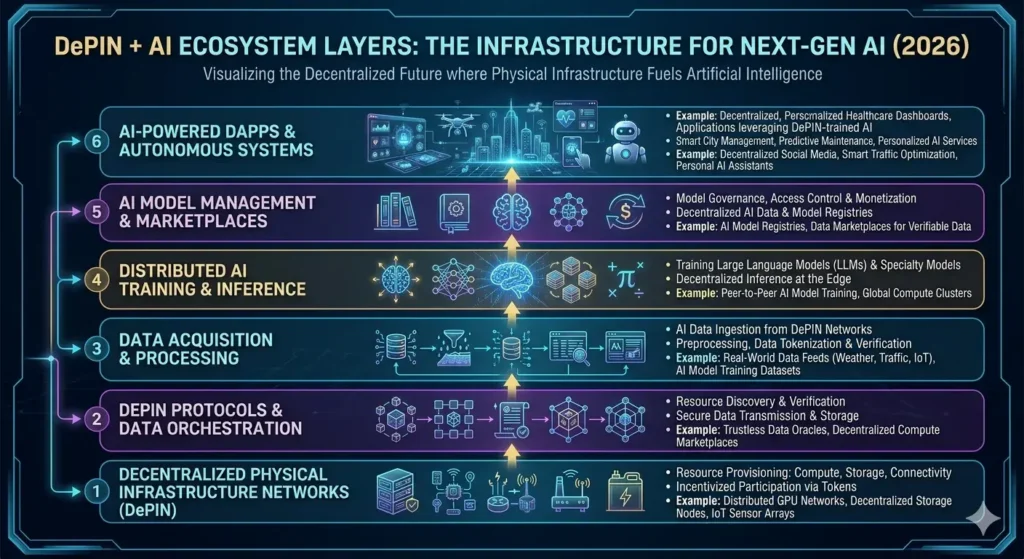
- DePIN as the engine: Decentralized Physical Infrastructure Networks (DePINs) provide the computing power needed for the most advanced language models.
- Market leaders: The Artificial Superintelligence Alliance (ASI) and Bittensor (TAO) dominate the decentralized artificial intelligence ecosystem.
- Transparency: This year’s focus has shifted from simply generating content to “Responsive AI,” where blockchain acts as the immutable record of data truth.
In March 2026, the cryptocurrency market reached a stage of technical maturity that few predicted five years ago. The narrative of “pure speculation” has been replaced by that of “systemic utility.” In this landscape, AI projects have solidified their position as the cornerstone of technological growth, merging the analytical power of neural networks with the immutable transparency of the blockchain.
This year, the trend known as AI crypto has moved from a promise to a working reality. From providing distributed computing to creating sovereign data markets, AI crypto is redefining entire sectors. In this guide, we analyze the protocols leading the way and how investors can navigate this high-potential ecosystem.
The state of the market: The Messari 2026 report
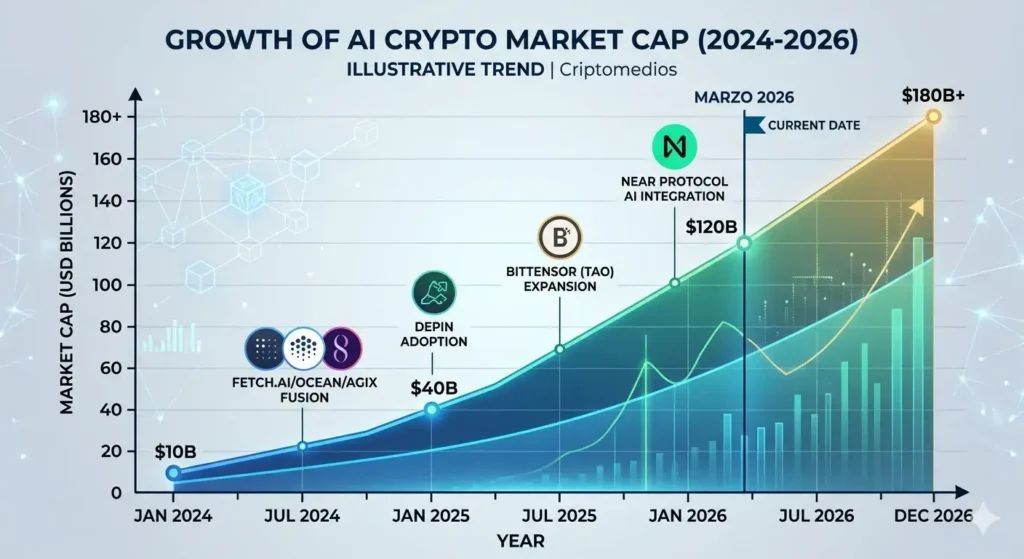
Recent data suggests that the market capitalization of AI-related assets has surpassed $150 billion. According to Messari ‘s latest thesis report for 2026 , the integration of AI into decentralized financial systems is now the primary driver of value. The report highlights that AI projects are responsible for more than 30% of transaction volume on specialized Layer 1 networks.
The migration to “Responsive AI” is the most significant paradigm shift. By 2026, users will no longer just be looking for speed, but for accountability: they want to know where the data used to train AI comes from and who owns the infrastructure that runs it.
Top 5 AI projects to watch in 2026
Below, we detail the protocols that, due to their technology, adoption, and vision, stand out as the undisputed leaders of this year.
1. Artificial Superintelligence Alliance (ASI)
Born from the historic merger of Fetch.ai, SingularityNET, and Ocean Protocol, this is undoubtedly one of the most ambitious AI projects ever created. Its goal is to develop an open-source artificial superintelligence that is not controlled by large technology corporations (Big Tech).
- Utility: Management of autonomous agents and monetization of data.
- Strength: A massive developer base and shared research resources.
2. Bittensor (TAO)
Bittensor continues to be the gold standard for decentralized machine learning. Through its subnetworks, it incentivizes miners to produce intelligence rather than simply solving cryptographic hashes. By 2026, Bittensor will lead open-source AI projects , enabling anyone to access cutting-edge language models in a permissioned and decentralized manner.
3. Render Network (RENDER)
Computer graphics and AI training require immense GPU power. Render has evolved into the “Amazon of GPUs” on the blockchain. By connecting those with idle hardware to those needing rendering or AI training, this protocol has become indispensable for the film and generative AI industries.
4. Akash Network (AKT)
As a key part of the DePIN movement, Akash offers a decentralized cloud (Supercloud) for hosting AI models. It’s a cost-effective and censorship-resistant alternative to traditional providers like AWS or Google Cloud. Hardware is crucial for modern AI projects , and Akash has democratized access to high-performance servers.
5. Near Protocol (NEAR)
Although it started as a Layer 1 blockchain, Near has successfully repositioned itself as the “Blockchain for AI.” Its focus on user sovereignty and consumer applications makes it ideal for integrating language models directly into the browser without intermediaries.
Expert and analyst opinions
The technological convergence of 2026 has generated a consensus among the biggest names in the industry. Andrew Kang of Mechanism Capital states that:
“We no longer invest in AI and crypto separately. Today’s most successful AI projects are those that use cryptography to solve the problem of identity and veracity in a world full of synthetic content.”
Meanwhile, analysts at MEXC News point out that the excitement surrounding 2024 has given way to a demand for real returns:
“People are tired of platforms that control all the data. By 2026, AI needs three things it can’t produce on its own: reliable data, shared infrastructure, and a track of accountability. That’s exactly what blockchain offers.”
Risks and Security Considerations
When evaluating AI projects , technical risk is always a factor. The complexity of smart contracts managing on-chain neural models can lead to vulnerabilities if rigorous audits are not performed. Furthermore, the volatility of AI altcoins remains higher than that of Bitcoin, as many of these technologies are still in the price discovery and mass adoption phase.
It’s crucial to conduct a fundamental analysis of liquidity and the team behind the protocol before allocating capital. At Criptomedios, we always recommend diversification as the best cryptocurrency security .
Frequently Asked Questions (FAQ)
What is the concept of “Responsive AI” or “Answerable AI”? It’s the trend for 2026 where decisions made by AI are required to be traceable and verifiable through the blockchain, avoiding the opaque bias of centralized AIs.
Is it safe to invest in AI altcoins right now? Like any crypto investment, it carries risks. However, AI projects with real infrastructure (like DePIN) tend to be more stable than those that only offer theoretical promises.
Why is hardware (GPU) so important for crypto AI? Because training AI models requires massive computing power. Decentralized networks allow this cost to be drastically reduced by eliminating corporate intermediaries.
How will the future of these AI projects influence the global economy? Decentralized AI is expected to enable an economy of autonomous agents that transact with each other without human intervention, optimizing processes from logistics to finance.
Conclusion
The year 2026 marks the point of no return for artificial intelligence on the blockchain. Choosing among the best AI projects requires an analytical eye that can distinguish between marketing hype and the robustness of decentralized infrastructure. Projects like ASI, Bittensor, and Render are not just creating tokens; they are building the foundations of tomorrow’s global neural network.
Want to be at the forefront of the technological revolution? Don’t let the future catch you off guard. Join our community at Criptomedios and access exclusive technical analysis of the best AI and DePIN projects of 2026. The time to invest in intelligence is now!

Steven Andros is a seasoned financial journalist and blockchain consultant with over 7 years of experience in the cryptocurrency ecosystem. As the founder and Editor-in-Chief of CriptoMedios, Steven focuses on making complex decentralized technologies accessible to the Spanish-speaking world.